
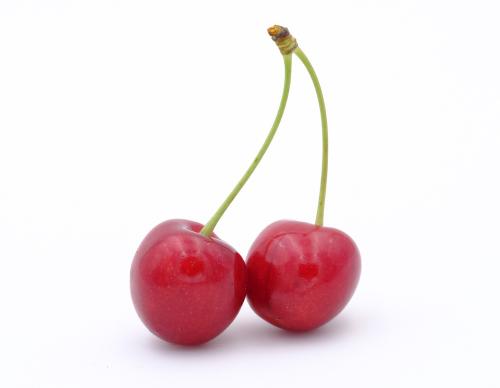

Delightful and crispy, in great demand on the market
Description
The cherry tree is an angiospermed autotypic plant belonging to the genus Prunus subg. Cerasus (Prunus subg. Cerasus), in the family Rosaceae and is a relative of the cherry tree.
It is a deciduous tree, with a height of up to twenty meters. It has the scientific name Prunus avium (Bird's Prunus). It originated in the Caucasus region and reached Europe very quickly and all its varieties are derived from the wild cherry tree, which is still used for propagation by grafting. The cherry tree is a natural hybrid of the cherry tree.
The cherry tree is cultivated for its delicious fruit, the cherry, while there are also varieties cultivated as ornamental trees. But its wood, which is resistant to moisture, is also used in the manufacture of furniture, as well as musical instruments and speakers, as it gives better acoustics.
There are many varieties of cherry that are basically divided into two major categories, those with soft flesh and those with crispy flesh. Several varieties are grown in Greece and the cherries produced are considered to be of excellent quality.
As for the place of origin of the fruit, no one knows for sure. However, the ancient Greeks believed that it came from Asia Minor and more specifically from the city of Kerasounda (hence the name) near the Black Sea. The Roman general Lucullus discovered them and brought them to Italy. Cherries are sweet, acidic and tart and have a warming effect on the body.
They are indicated in anemia, because, due to their high iron content, they promote hematopoiesis, in oligocarbohydrate diets, because the sugars they contain satisfy the sense of sweetness without burdening the body with calories. Their mineral content increases the body's alkaline reserves, thus helping to reduce fatigue and prolong muscle effort. They act as a detoxifying agent for the liver, gallbladder, glandular system and the body in general. The fibre and organic acids they contain make them excellent laxatives with a powerful laxative action. The mineral salts and trace elements they contain have a soothing effect on rheumatic pains. Cherries are diuretic and digestive, and have antiseptic properties against urinary tract infections. Also, eating cherries could help prevent against diabetes.
In Greece they are produced in Kolindros, Pieria, Edessa, Orma, Pella, where the largest quantity in Greece is produced, Grevena, North Chios and several other areas of northern Greece.
Turkey leads the world in cherry production. It is followed by the USA, Iran, Ukraine, Germany and Japan. Greece ranks tenth in the world, with forty-three thousand tonnes every year.
Period during which First Fruit Stand markets the cherry: May - July
Packaging Guide
Types of packaging depending on the product to be packaged.