
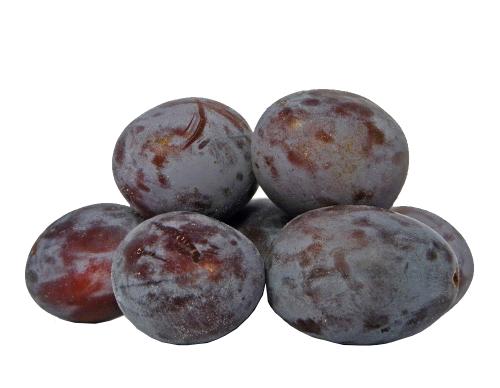

Sweet and sour, with highly stimulating properties.
Description
The plum tree (generic name: Prunus domestica) is an angiosperm, a deciduous, deciduous tree of the genus Prunus[a], in the family Rosaceae, and is a sister tree to the rowan. It is a native plant of the northern hemisphere countries, originating from the Caspian Sea regions.
Plum is a fruit with a sweet taste and a nice aroma. It is the fruit of the plum tree. It belongs to the genus Prunus (primroses or ewes), along with peaches and suckers.
It is oval or ellipsoidal in shape and deep blue or purple in colour when ripe. It can be eaten fresh as a fruit, or dried without altering its nutrients. It is made into jam, juice and used in confectionery. The fruit intended for drying is picked when ripe. They are then placed in special ovens at a temperature of 65-90 degrees Celsius.
Plums are rich in vitamin C. They also contain vitamin A, calcium, cellulose and magnesium.
Today it is widely cultivated in Europe from north to south, Asia and North America.
China leads the world in plum production. It is followed by Romania, the USA and Serbia. In Greece, organised cultivation is limited and mainly takes place in the northernmost part of the country: in Thessaly and Macedonia. The plum is also a typical product of Skopelos.
European plums have fruit with flesh that is easily detached from the stone. The group includes the varieties that have always been grown in Europe, most of which are suitable for fresh consumption, drying and for the production of jams and juices.
Period during which First Fruit Stant markets the plum: May - January.
Packaging Guide
Types of packaging depending on the product to be packaged.